What a Heatmap Revealed About Our Client's Funnel Drop-Off
A client came to us convinced their funnel was broken. The calls were booked, the worksheets were built, the automations were firing on schedule, and people still weren't buying. Everything on paper looked right, and the numbers still said otherwise.
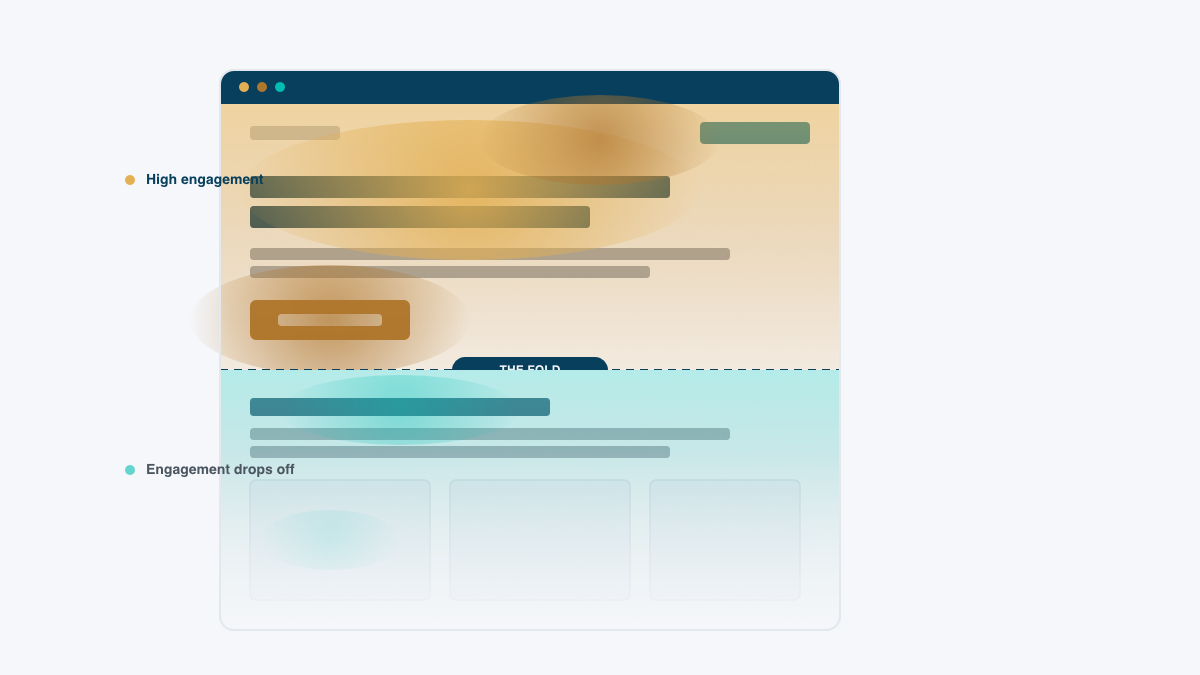
We installed Hotjar and watched the recordings. Visitors landed on the sales page, scrolled a few inches, and stopped. Not at the pricing section, not at the testimonials, right at the bottom of what showed on their screen before they had to scroll. Below the fold, the page may as well not have existed.
Key Takeaways
- Hotjar heatmaps showed visitors dropping off at the exact point where the page content ended above the fold, before they ever saw the offer.
- Rewriting the top of the page, not the whole funnel, was what got people scrolling and clicking again.
- Cart abandonment across industries sits around 70%, per Baymard Institute research, which means most of your funnel's damage happens before someone ever hits checkout.
What Optimizing a Funnel Means
Most advice on funnel optimization starts with the tech. Fix the automation, tighten the CTA, add another follow-up email. That's step three, not step one. Step one is figuring out where people are stopping, and why, before you touch anything.
A funnel with every piece working correctly can still fail if the wrong piece is getting all the attention. Our client's funnel had solid automation and a clean CRM setup behind it. None of that mattered if visitors never made it past the first screen.
The Page Nobody Scrolled Past
Once we saw the heatmap, the fix wasn't complicated. The top of the sales page led with a headline about the program name and a stock photo, the kind of opener that tells a visitor nothing about what's in it for them. We rewrote it to lead with the outcome the client's customers wanted, and moved a single proof point up where it would be seen without scrolling.
The change took an afternoon. Within the next two weeks of traffic, session recordings showed more visitors scrolling well past the fold and clicking into the offer section, something the earlier recordings barely showed at all.
None of this required new tools or a funnel rebuild. It required watching what real visitors were doing and fixing the one thing standing in their way first.
If your own opt-in or landing page hasn't been checked against real visitor behavior, that's the same starting point we'd recommend. Optimizing your opt-in page for what a visitor sees in the first few seconds tends to move the needle more than almost anything further down the funnel.
When the Problem Isn't Visual, It's the Words
Not every funnel breaks the same way. Another client's issue had nothing to do with what visitors could see and everything to do with what the copy said. The sales page listed exactly what people would get: three calls, two worksheets, a private portal. Accurate, and useless. It read like a syllabus, not an invitation.
The problem was that the copy described deliverables instead of a transformation. Nobody was buying calls and worksheets. They were trying to picture themselves on the other side of the problem the program solved, and the page never got them there. We rewrote the messaging around that outcome, and the client started hearing something new in their sales calls: prospects who could already describe what their life looked like after the program, before they'd even signed up.
Two funnels, two different diagnoses. One was a visibility problem, the other was a language problem. The metrics pointed to different places because the actual breakdowns were different.
Building a Habit, Not a One-Time Fix
Neither of these funnels stayed fixed because we made one change and walked away. A funnel needs a regular check-in, the same way any system does once real traffic starts running through it.
A few habits worth building in:
- Pull conversion rates, open rates, and click-through rates on a set schedule, not just when something feels off. Tools like Keap, ConvertKit, or MailerLite will show you email-side numbers, and Google Analytics covers the rest of the site.
- Watch a handful of new session recordings each month, even when nothing seems wrong. Problems show up in behavior before they show up in the numbers.
- Ask people directly. A short survey or a reply-and-tell-me-why in an email will surface objections no dashboard shows you.
- Once someone converts, the funnel isn't done working. A nurture sequence that keeps delivering value after the sale is what turns a one-time buyer into someone who sticks around.
The businesses that keep their funnels healthy aren't the ones with the fanciest tech stack. They're the ones who look, regularly, and are willing to fix the unglamorous thing (a headline, a sentence, a line of copy) instead of assuming the problem is bigger than it is.
If you've been staring at underwhelming funnel numbers and aren't sure whether the issue is visibility, messaging, or something else entirely, that's exactly the kind of diagnosis worth getting a second set of eyes on before you rebuild anything.
How do I know if my funnel's problem is visual or the copy itself?
Start with a heatmap or session recording tool like Hotjar. If visitors are dropping at a specific scroll point regardless of what the page says, it's likely visual or layout. If they're scrolling through the whole page and still not converting, the words themselves usually need attention.
What's the fastest way to spot a funnel bottleneck?
Look at where your metrics drop the most between steps, not just the final conversion number. A page with strong traffic but a steep drop after the first screen almost always points to what's visible above the fold.
Do I need to rebuild my whole funnel if one part isn't converting?
Usually not. Both of the fixes described above were changes to a single page, not a funnel rebuild. Diagnose the specific breakdown first. Rebuilding everything without knowing what's broken tends to waste time and budget.
How often should I be reviewing funnel metrics?
Monthly at minimum, with a closer look at session recordings or heatmaps every quarter. Trends and traffic sources shift, and a funnel that converted well six months ago can quietly stop working without a regular check.
Does fixing the top of a sales page make that much of a difference?
Start with a heatmap or session recording tool like Hotjar. If visitors are dropping at a specific scroll point regardless of what the page says, it's likely visual or layout. If they're scrolling through the whole page and still not converting, the words themselves usually need attention.

0 Comments