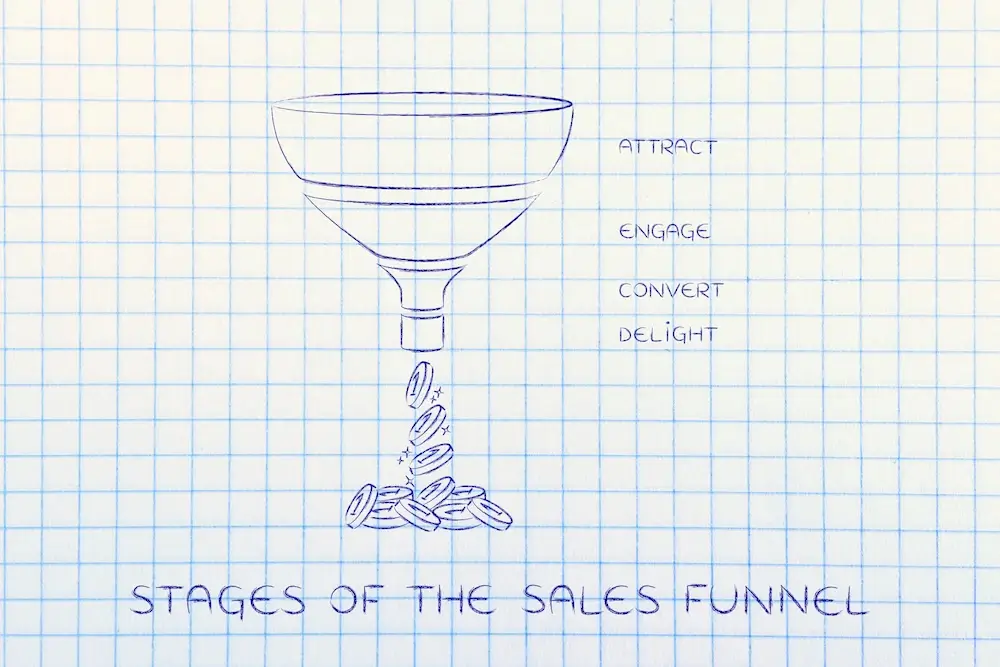
The term "sales funnel" gets used so often in small business marketing circles that it's started to lose any useful meaning. So What is a sales funnel really? Some people use it to describe a single landing page. Others mean a complex sequence of emails, ads, and automations running across multiple platforms. A coach in a Facebook group will tell you that you absolutely need one before you do anything else, and a consultant will tell you that funnels are overrated and relationships are what matter.
Neither of those is wrong exactly, but neither is particularly useful if you're trying to figure out whether building a funnel should be on your to-do list this quarter.
Here's a plain explanation of what a funnel is, what it actually does, and a clear answer on whether your business needs one right now.
The average conversion rate across industries is 5.13%, and professional services convert at 6.1%, based on Ruler Analytics' 2026 benchmark report tracking more than 5 million conversions across 13 industries.
Leads contacted within 5 minutes close at 32%, more than double the 12% close rate for leads contacted after 24 hours, and 42% of companies still aren't responding within a full day, per Optifai's analysis of 939 B2B companies from Q2 2025 through Q1 2026.
A low opt-in rate, low email opens, and low booking rates each point to a different fix: landing page copy, the welcome sequence, or the offer itself, so diagnosing a weak funnel means checking each stage separately, not rebuilding the whole thing.
What is A Sales Funnel... Actually?
A sales funnel is the path a person takes from first hearing about your business to becoming a paying client. The word "funnel" comes from the shape of the process: a wide opening at the top where a large number of people first encounter you, narrowing progressively as some of those people move closer to a buying decision, and a narrow bottom where the ones who are genuinely interested make a purchase.
If the word itself makes you wince, that reaction is fair. "Sales funnel" gets attached to a lot of aggressive, one-size-fits-all launch tactics, and plenty of people have decided they want no part of that. Call it a customer journey, a lead path, or nothing at all if you'd rather, the label doesn't change what's actually happening: someone finds you, gets to know you, and either decides to buy or doesn't. What matters here is the structure, not the name.
Every business already has a funnel whether they've built one deliberately or not. If someone finds your website, reads your About page, signs up for your email list, and then books a call three weeks later, they moved through a funnel. The question is whether that path happened by design or by accident, and whether you're losing people at a stage where a bit of structure would have kept them moving.
A deliberately built funnel makes each of those stages intentional. You know where people come from, you know what you're asking them to do at each step, and you have something in place to follow up when they don't take the next step on their own.
What a Funnel Typically Looks Like
The stages vary depending on the business and the offer, but most small business funnels follow a similar shape.
At the top, something attracts attention and invites a first connection. This might be a free download, a webinar, a quiz, a blog post, or an ad that leads to a landing page. The goal at this stage is straightforward: get the right people to raise their hand and share their email address.
In the middle, a series of emails or touchpoints does the work of building trust and moving interested people toward a decision. This is where most funnels fall apart. The top of the funnel works, people sign up, and then nothing happens, or a single welcome email goes out and that's the end of it. The middle of a funnel is where the relationship gets built, and skipping it means you're relying on the person to take initiative at every step rather than giving them a path to follow.
At the bottom, there's an offer and a clear way to take action. A sales page, a booking link, a phone call, a checkout page, whatever fits the way your business sells. The bottom of the funnel only converts well when the middle has done its job.
The Part People Get Wrong
Most small business owners think of a funnel as a one-time thing you build and then leave alone. Set it up, turn it on, watch the leads come in. That's not how it works in practice, and the expectation that it should is responsible for a lot of abandoned funnels and wasted setup costs.
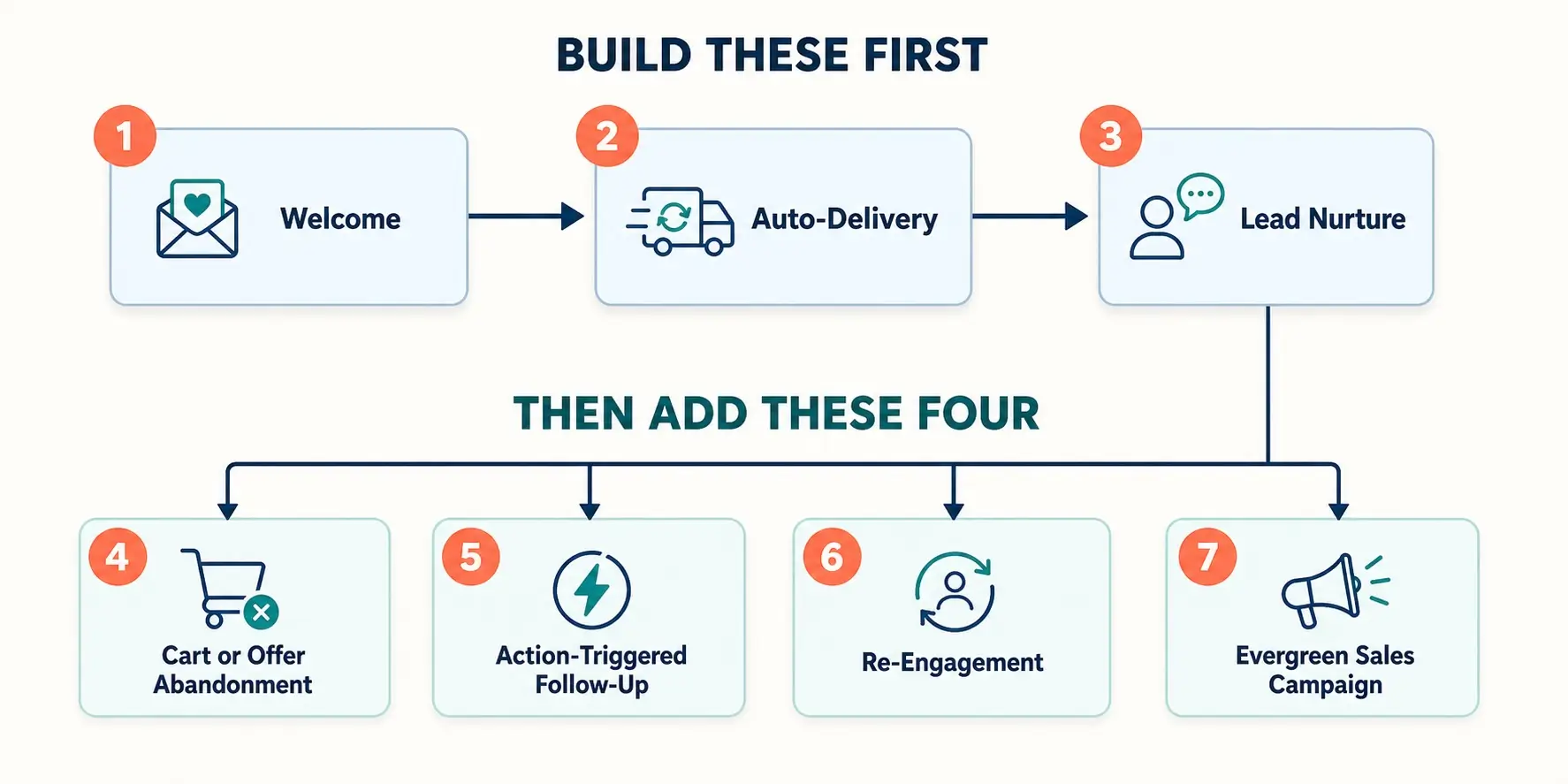
A funnel is a system that needs to be monitored and adjusted based on what the data shows. If your opt-in rate is low, the problem is probably your lead magnet or your landing page copy. If people are signing up but not opening the follow-up emails, the problem is in the welcome sequence. If they're opening emails but not booking calls, the problem is likely the offer or the way it's positioned. Each of those is a different fix, and knowing which one to make requires paying attention to where people are dropping off. Building each of those touchpoints as its own automated campaign, rather than patching them one at a time, is what keeps the fix from becoming a permanent fire drill; see 7 Marketing Campaigns Every Small Business Should Automate for how those pieces fit together.
One of our coaching clients puts out a video every week that points back to her membership, and the sequence behind it gets checked and adjusted constantly, not built once and left alone. That ongoing attention is the difference between a funnel that quietly stops working and one that keeps converting month after month.
Do You Need One
The short answer is yes, if you're regularly attracting new leads and losing track of them before they buy. If people are finding you through referrals, social media, your website, or anywhere else, and the follow-up after that first contact is inconsistent or nonexistent, a funnel is the structure that fixes that. It turns a process that currently depends on your memory and your bandwidth into something that runs whether you're working or not.
The longer answer has a few conditions attached.
You don't need a complex multi-stage funnel if your business runs entirely on referrals and word of mouth, your current clients keep coming back without any prompting, and your pipeline is consistently full without any active lead generation. In that case, a funnel adds infrastructure to a process that's already working, and the return on that investment may not be worth it at this stage.
You probably do need one if any of the following describes your situation: you're generating leads but losing them between first contact and a buying decision, you're spending time manually following up with people who expressed interest weeks ago, or you've launched a new offer and you're not sure why it isn't gaining traction. A funnel won't fix an offer that doesn't fit what the right people actually want, but it will make sure that the people who are interested don't fall through the cracks while you're busy with everything else.
One way to check where you actually stand: the average conversion rate across industries is 5.13%, and professional services average 6.1%, per Ruler Analytics' 2026 benchmark of more than 5 million tracked conversions. If your own opt-in-to-client rate is well under that, the middle of your funnel is the more likely place to start looking, not the top.
We've seen what's on the other side of getting this right. One of our clients in the health industry built a funnel onto her free offers, and once it was live, roughly every 100 opt-ins turned into 4 to 5 sales, right in line with that industry benchmark. The funnel didn't create the demand for her offer. It just made sure the people who already wanted it didn't get lost before they bought.
Where to Start
If you've decided a funnel makes sense, the place to start is not with the technology. It's with a clear answer to three questions: who are you trying to attract, what are you asking them to do first, and what happens after they do it.
The technology, whether that's the platform, the email tool, or the landing page builder, is a decision that follows from those answers, not one that precedes them. Most of the small business owners we talk to agonize over technology mainly because they don't understand it yet, weighing ClickFunnels against Kajabi against Keap against just building it into their own website, before they've nailed down a clear offer to put inside any of them.
If you're not sure where your business stands right now or what's actually getting in the way of growth, that's what the free Power Up Call is for: a discovery conversation to figure out where things stand and how we can help. When you're ready to actually build the thing, mapping the offer, the sequence, and the tech that runs it, that's what our funnel setup service handles.
Frequently Asked Questions
What is a sales funnel in simple terms? A sales funnel is the path someone takes from first hearing about your business to becoming a paying client, moving from a wide top (everyone who first encounters you) to a narrow bottom (the people who actually buy). Every business has one whether it was built on purpose or not, and the only question is whether it's structured or accidental.
Do I need a sales funnel if most of my clients come from referrals? Not necessarily. If your pipeline stays full through word of mouth and your current clients keep returning without any prompting, adding funnel infrastructure to a process that's already working usually isn't worth the setup cost. A funnel earns its place when leads are coming in and getting lost before they buy, not when referrals alone keep you booked.
Why isn't my sales funnel converting even though people are signing up? It depends on where the drop-off happens. A low opt-in rate points to the lead magnet or landing page copy, people signing up but not opening emails points to the welcome sequence, and opens without bookings points to the offer or how it's positioned. Speed matters too: leads contacted within 5 minutes close at 32%, more than double the 12% close rate for leads contacted after 24 hours, according to Optifai's analysis of 939 B2B companies, which shows how much of this is a follow-up problem rather than a traffic problem.
How often should I review my sales funnel? Quarterly, at minimum. A funnel isn't a set-it-and-forget-it project. The businesses that get the most out of theirs treat it as a permanent part of their marketing infrastructure and adjust it as soon as the numbers show where people are dropping off.
What should I build first when setting up a funnel? Answer three questions before touching any software: who you're trying to attract, what you're asking them to do first, and what happens right after they do it. The platform, email tool, and landing page builder are decisions that follow from those answers, not decisions to make first.
Will a sales funnel fix an offer that isn't selling? No. A funnel makes sure the people who are already interested don't fall through the cracks, but it can't manufacture interest in an offer that doesn't fit what your audience actually wants. If a new offer isn't gaining traction, check the offer itself before assuming the follow-up structure is the problem.
If you're not sure whether a funnel is the right next step for your business, book a free Power Up Call and we'll help you figure out where you actually stand. When you're ready to build one, that's what our funnel setup service is for.
0 Comments