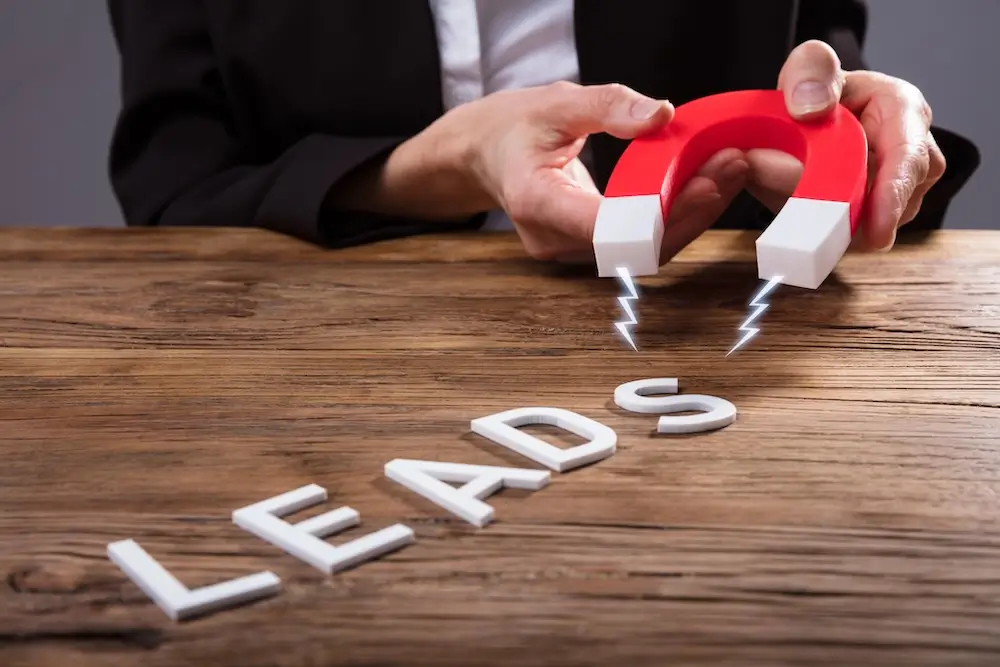
Here's what a lead magnet actually is: the thing you trade for an email address. A checklist, a template, a short guide, a free audit, whatever it is, someone gets it the moment they hand over their contact information, and that trade is the whole engine behind list building and lead generation. Most small business owners already know they need one. Far fewer know why the one they built isn't working.
Giveaways and contests convert at 29.37%, the highest of any lead magnet category, with learning resources like webinars and mini-courses close behind at 27.4% and interactive tools like quizzes and calculators at 26.44%, according to MailerLite's 2026 analysis of more than 41,000 signup forms.
That same MailerLite study found forms convert at 24.44% on average compared to 8.96% for pop-ups, so where you place the lead magnet matters almost as much as what it is.
A lead magnet only works when it solves one specific problem your ideal client already knows they have, which is why a broad "10 Marketing Tips" download consistently underperforms a narrow one like "The 5-Email Sequence for Recovering Abandoned Carts."
What Is a Lead Magnet, Exactly
A lead magnet is a piece of content or value you offer in exchange for an email address. Some people call it a freebie, a free offer, an opt-in incentive, or a bribe, and honestly, bribe isn't far off. You're asking a stranger to trust you with their inbox before they've bought anything, and a good lead magnet is what makes that trade feel worth it to them.
The format can be almost anything. A checklist, a cheat sheet, a worksheet, a template, a script, a resource list, a short PDF report, a planner, an ebook. What matters isn't the format, it's whether the thing inside actually solves a problem your visitor is already trying to solve, right now, today.
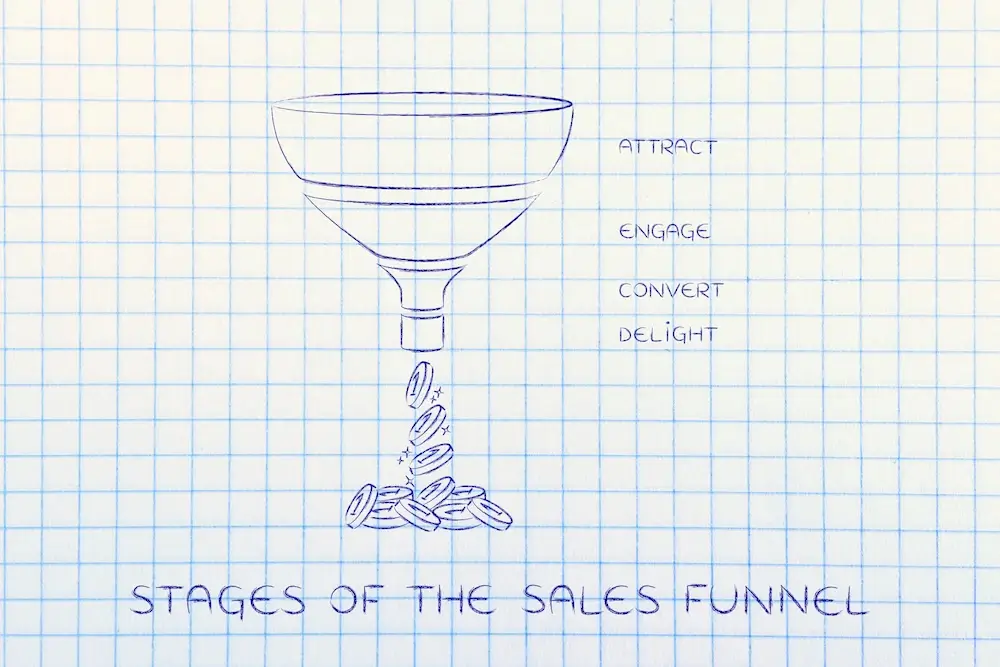
A lead magnet sits at the very top of your sales funnel. It's the first real exchange between a stranger and your business, and everything that happens afterward, the welcome sequence, the nurture emails, the eventual offer, depends on that first exchange feeling like a fair trade.
What Makes One Actually Convert
Three things separate a lead magnet people download and use from one that sits unopened in someone's inbox.
It has to solve a specific problem, not a general category. "Marketing Tips for Small Business" competes with a thousand identical downloads. "The Exact Email to Send When a Client Ghosts You Mid-Project" doesn't compete with anything, because almost nobody else has written it. Specificity is what makes something feel worth an email address.
It has to be easy to use immediately. A five-page checklist someone can act on in the next ten minutes builds more trust than a forty-page guide that gets downloaded and never opened. If your ideal client has to set aside an hour to get value from your lead magnet, most of them never will.
It has to carry real weight for the person receiving it, even if it looks small from where you're standing. A one-page template might feel minor to you because you could write it in your sleep, but if it solves a problem your ideal client has been stuck on for months, the value they perceive is high regardless of how long it took you to make.
Format matters too, and the data backs up what a lot of small business owners assume is true anecdotally. MailerLite's analysis of over 41,000 forms found giveaways and contests converting at 29.37%, learning resources like webinars and courses at 27.4%, and interactive tools like quizzes and calculators at 26.44%. Reports and ebooks still perform well at 24.61%, well ahead of discounts at 16.2% and generic newsletter signups at 17.46%. If your current lead magnet is "sign up for our newsletter," that's likely part of why it isn't converting.
The Part Most People Skip
You can't build a specific lead magnet without knowing exactly who it's for, and this is the step most business owners rush past to get to the fun part of designing the download.
Before you build anything, you need three answers. Who is your audience, specifically, not "small business owners" but the actual person you serve. Where are they stuck, what's the exact problem keeping them up at night that they haven't solved on their own. And what's the one thing you could hand them that would move them forward today, not eventually, today.
Skip this step and you end up with a lead magnet built around what you want to say about your business instead of what your visitor is actively trying to fix. Those two things are rarely the same, and visitors can tell the difference immediately.
Where a Lead Magnet Fits Into the Bigger Picture
A lead magnet by itself doesn't grow a business. It's the entry point into a system, and what happens in the days after someone downloads it matters more than the download itself.
We saw this play out with one of our clients in the coaching industry. Her lead magnet was a simple one-page PDF, nothing elaborate, and the autoresponder email that fires the moment someone opts in pulled a 69.1% open rate and 74 clicks off 181 delivered. That's a 59.2% click-to-open rate, meaning over half the people who opened actually clicked, which is exactly what you want to see right after someone raises their hand for a lead magnet. Numbers like that tell you the offer and the ask are matched to where the reader's head is at in that exact moment, still hot, still ready to act, and it only holds if the lead magnet itself already earned that level of interest. In this case, a single page did the job a forty-page guide never would have.
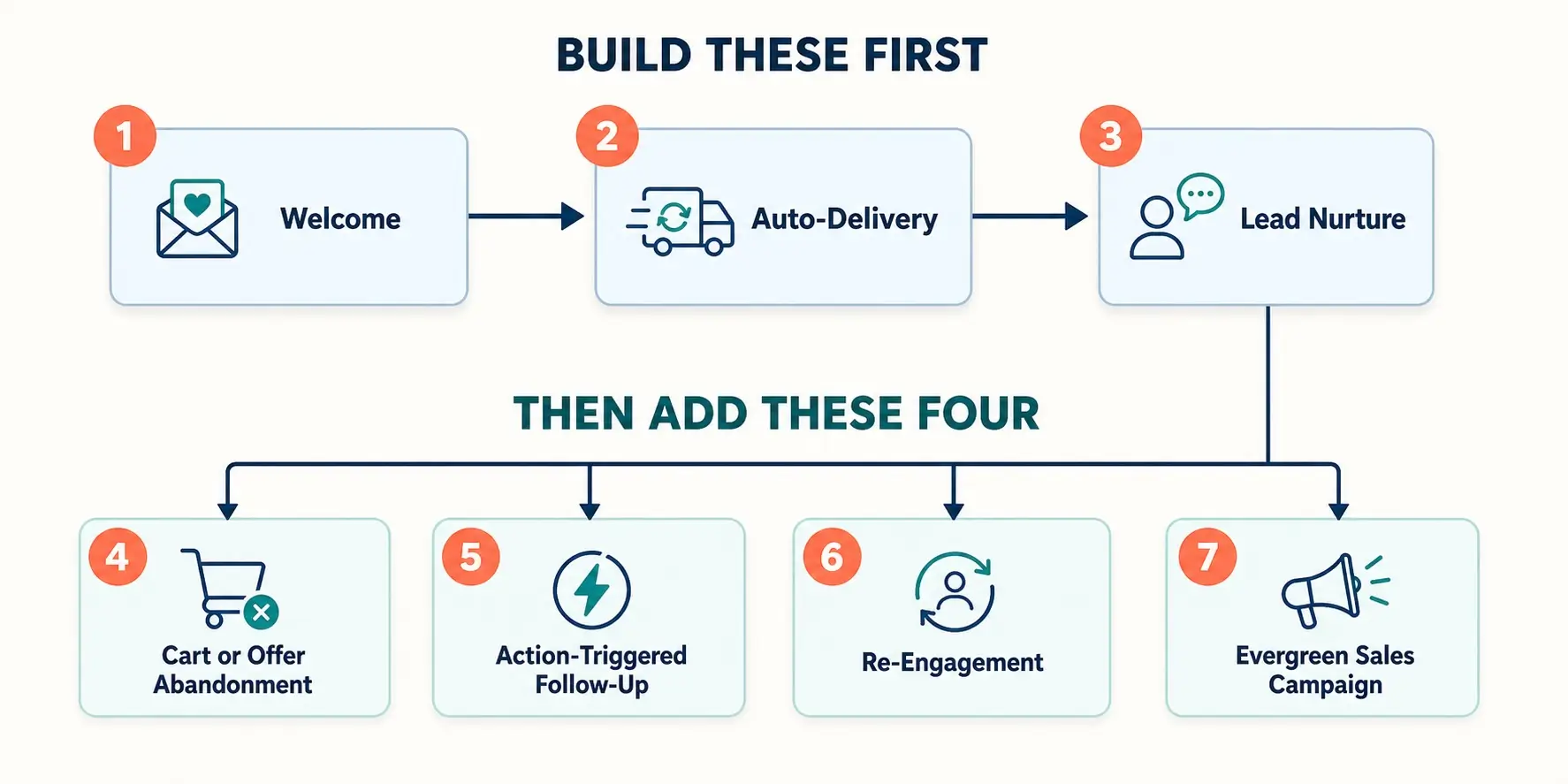
If your welcome sequence doesn't arrive fast or doesn't deliver on what the lead magnet promised, you lose the trust you just built before you've had a chance to use it. And if there's no plan for what happens next, no nurture sequence, no next offer, the lead magnet becomes a dead end instead of a first step. Building each stage as its own deliberate piece, the lead magnet, the delivery, the follow-up, is what turns individual campaigns into a system instead of a pile of one-off tactics.
Frequently Asked Questions
What is a lead magnet? A lead magnet is a piece of content or value, a checklist, template, guide, or short report, that you offer in exchange for an email address. It's the first exchange between a stranger and your business, sitting at the very top of your sales funnel, and it only works when it solves a specific problem your ideal client already knows they have.
What's the difference between a lead magnet and a freebie? Nothing, really. Lead magnet, freebie, free offer, opt-in incentive, they all describe the same thing: content or value offered in exchange for an email address. The term you use matters less than whether the thing you're offering actually solves a problem your visitor already knows they have.
What type of lead magnet converts best? Giveaways and contests lead at 29.37%, with learning resources like webinars and mini-courses at 27.4% and interactive tools like quizzes and calculators at 26.44%, according to MailerLite's analysis of more than 41,000 signup forms. Reports and ebooks still convert well at 24.61%. The format matters less than specificity, but format sets the ceiling on how well even a specific offer can perform.
Should my lead magnet be short or long? Short and immediately useful beats long and comprehensive almost every time. A five-page checklist someone can act on in ten minutes builds more trust than a forty-page guide that sits unread. If you're choosing between adding more content or cutting it down, cut it down.
Why isn't my lead magnet converting even though the traffic is there? Usually it's too broad. A lead magnet aimed at "small business owners" in general competes with everything else in that space. One built around a specific, narrow problem, something your exact ideal client is dealing with right now, has almost no competition and converts far better.
Do I need a different lead magnet for every offer? Not necessarily, but you do need one built around the specific problem that leads into whatever you sell next. If your paid offer solves a bigger version of the problem your lead magnet solves, the path from free to paid feels obvious. If they're unrelated, you'll get subscribers who never buy.
How do I know if my lead magnet has enough perceived value? Ask whether it solves a problem your ideal client is actively stuck on right now, not something they might get around to eventually. Perceived value comes from urgency and specificity, not page count or production quality. A one-page template that solves today's problem beats a polished guide that solves a someday problem.
If you're not sure whether your current lead magnet is pulling its weight, or you haven't built one yet, that's exactly what the free Power Up Call is for. And when you're ready to build the lead magnet, the opt-in page, and the sequence behind it as one connected system, that's what our funnel setup service handles.
0 Comments