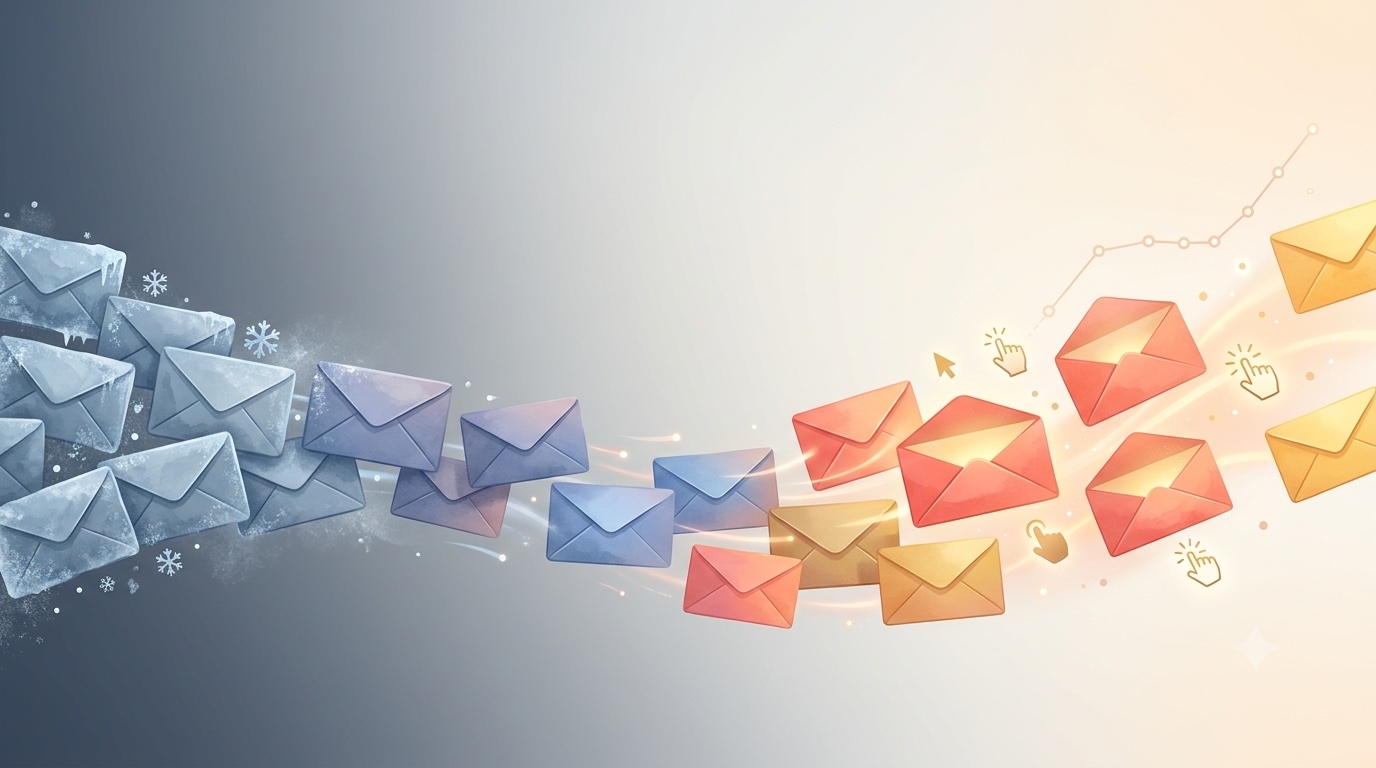
The Hidden Cost of a Cold Email List (and How to Warm It Back Up)
You built your list the hard way. A freebie here, consistent posting there, maybe some ad spend to get people through the door, and now a chunk of them just sits there, not opening, not clicking, not doing anything except quietly taking up space in your subscriber count.
Most business owners pour their energy into growth and forget that keeping people is a completely different job than getting them. Growth gets you numbers. Retention gets you revenue. Real **email list retention** is the difference between a list that makes you money and one that just makes you feel good on paper.
Key Takeaways
- A warm list of 500 engaged subscribers will consistently outsell a cold list of 5,000 who don't open, since deliverability and engagement matter more than raw subscriber count.
- Cold lists cost you twice: MarketingSherpa research puts natural list decay at 22.5% a year, and inbox providers can start filtering your emails to spam once engagement drops low enough.
- Segmentation and one solid re-engagement sequence are usually enough to fix a cooling list. Mailchimp's own data shows segmented campaigns get 14% higher open rates, and win-back campaigns recover roughly 5-12% of inactive subscribers.
What Retention Means
Retention is the work of staying relevant to someone after they've already said yes to you. They subscribed once. Retention is what keeps them from mentally checking out, or worse, hitting unsubscribe six months later.
A warm list of 500 people who open your emails will outsell a cold list of 5,000 who don't. I still run into business owners who believe a bigger list automatically means a better one, it's an old-school way of measuring success, and I've spent plenty of conversations walking clients through why deliverability and open and click-through rates matter more than the raw subscriber count sitting in their dashboard.
The average email open rate across industries sits around 19-20%, with click-through rates averaging roughly 2.4% [2026 Email Marketing Benchmarks]. If your numbers are noticeably below that, your list isn't just quiet, it's cooling off, and it's worth paying attention to before it goes cold entirely. (If you want a deeper look at what moves the needle here, I broke it down in Boost Your Email Open Rates: 5 Tips for Success.
What a Cooling List Costs You
When someone stops opening your emails, the damage doesn't stop at one lower stat. It moves through your whole business.
Inbox providers watch engagement patterns over time, not just single sends, so a list full of ignored emails can start landing you in spam for everyone, including the people who do want to hear from you. That risk is bigger than most people realize: Validity's 2026 Deliverability Benchmarks Report found that even with inbox placement improving industry-wide, one in seven legitimate marketing emails still fail to reach the inbox. And subscribers who can't find an easy unsubscribe link, especially on mobile, often hit "report spam" instead, since it accomplishes the same thing in one tap. That single click hurts your sender reputation far more than a clean unsubscribe would. (I go deeper into exactly how this happens in Why Your Emails Are Going to Spam, and How to Fix It.
Every subscriber you got through ads or content took time or money, and if they've checked out, that spend is gone with nothing to show for it. Lists also decay on their own. List decay is the natural, ongoing loss of engaged contacts as people change email addresses, stop checking old inboxes, or simply lose interest over time, even if you never do anything wrong. Research from MarketingSherpa puts natural list decay at around 22.5% a year, so a cold list doesn't just sit still, it shrinks in value even if you never send another email. And you can't sell to someone who never sees the email in the first place.
Winning back someone already on your list is almost always cheaper and faster than convincing a total stranger to join, opt in, and eventually buy. Most entrepreneurs skip this step completely and go straight to growth mode instead, chasing new subscribers to replace the ones sliding away in the background.
The Signs Your List Is Slipping
A few things tend to show up before a list goes fully cold. Your open rate has dropped noticeably over the last few months, not just one bad week. Fewer people are clicking through on your links. Unsubscribes, or spam complaints, are creeping up. Or you haven't emailed in a while, and now sending feels awkward.
If a couple of these apply to you, the good news is this is fixable. It usually doesn't take a full rebuild, just a few deliberate adjustments.
How Retention Works in Practice
You don't need a 30-step automation to fix this. You need to be intentional about a few things.
Segmentation means sending the right message to the right group instead of blasting everyone the same thing. That might be as simple as separating people who've bought from you before from people who haven't, or splitting your list by what they clicked on last. Mailchimp's own data shows segmented campaigns get 14% higher open rates and roughly double the click-through rate of unsegmented sends, and the effort behind it is usually smaller than people expect once the list is organized to begin with. This is closely related to behavior-based email campaigns, where you're sending based on what someone does rather than a generic schedule.
Re-engagement campaigns are a short, personal nudge aimed at your least active subscribers, something like "still want to hear from us?" with one clear button to click. Research shows this kind of campaign can win back roughly 5-12% of inactive contacts on its own, which sounds small until you realize that's a real chunk of people you were about to lose for good.
Consistency means showing up regularly enough that people remember who you are between purchases or projects, the same principle behind email nurture campaigns that build a relationship over time instead of a single pitch. Value first means giving something useful before you ever ask for anything. And clear direction means telling the reader exactly what to do next instead of hoping they figure it out on their own.
Pick even one or two of these and you'll usually see movement within a few sends.
When to Re-Engage vs. When to Just Let Them Go
Not every cold subscriber is worth chasing. If someone hasn't opened a single email in a year, keeping them on your list works against you. They're dragging down your engagement rate, which affects deliverability for everyone else on the list too, no matter how loyal it feels to hang on.
A good rule of thumb: try one solid re-engagement sequence first. If there's still no response, it's usually healthier to remove them than to keep sending into the void. A smaller, engaged list will outperform a bigger, half-dead one every time, and your inbox providers will trust you more for it.
I worked with a client who'd never removed a single subscriber in years. Every time she sent a campaign, a large share of that list never opened it, and she'd come to see that as normal. Once we cleared out the contacts who'd gone completely dark, her open and click rates both climbed within the next few sends, because the list left standing was made up of people who wanted to hear from her.
Frequently Asked Questions
How long does it take to warm up a cold email list?
Most re-engagement sequences show measurable movement within a few sends. If you segment your list and run a short win-back campaign, you'll typically know whether it worked within 2 to 3 weeks, since win-back campaigns recover roughly 5-12% of inactive contacts on the first attempt.
How often should I email my list?
There's no universal number, but consistency matters more than frequency. Weekly or biweekly works well for most small businesses. I go into more detail on how to find your rhythm in How Often Should You Email Your List, but picking a cadence and sticking to it is what keeps subscribers knowing what to expect.
What's a good open rate for a small business?
Anywhere above 20% is solid, and above 25% is strong. If you're consistently below 15%, that's usually a sign your subject lines, segmentation, or list health need attention.
What is email list decay?
List decay is the natural, ongoing loss of engaged contacts as people change email addresses, switch jobs, or lose interest over time, even when you haven't done anything wrong. MarketingSherpa puts the average rate at 22.5% a year, so a list left untouched loses more than a fifth of its engaged contacts annually.
Should I delete subscribers who never engage?
Generally, yes, after you've given them a genuine chance to re-engage. A clean, responsive list protects your deliverability far more than a large, unengaged one helps your ego.
Get Quick Wins with the Email Retention Cheat Sheet
If you want a shortcut to bringing your list back without overhauling your whole funnel, my Email Retention Cheat Sheet walks through simple ways to lift your opens, get more clicks, and keep people glad they're still subscribed.
0 Comments