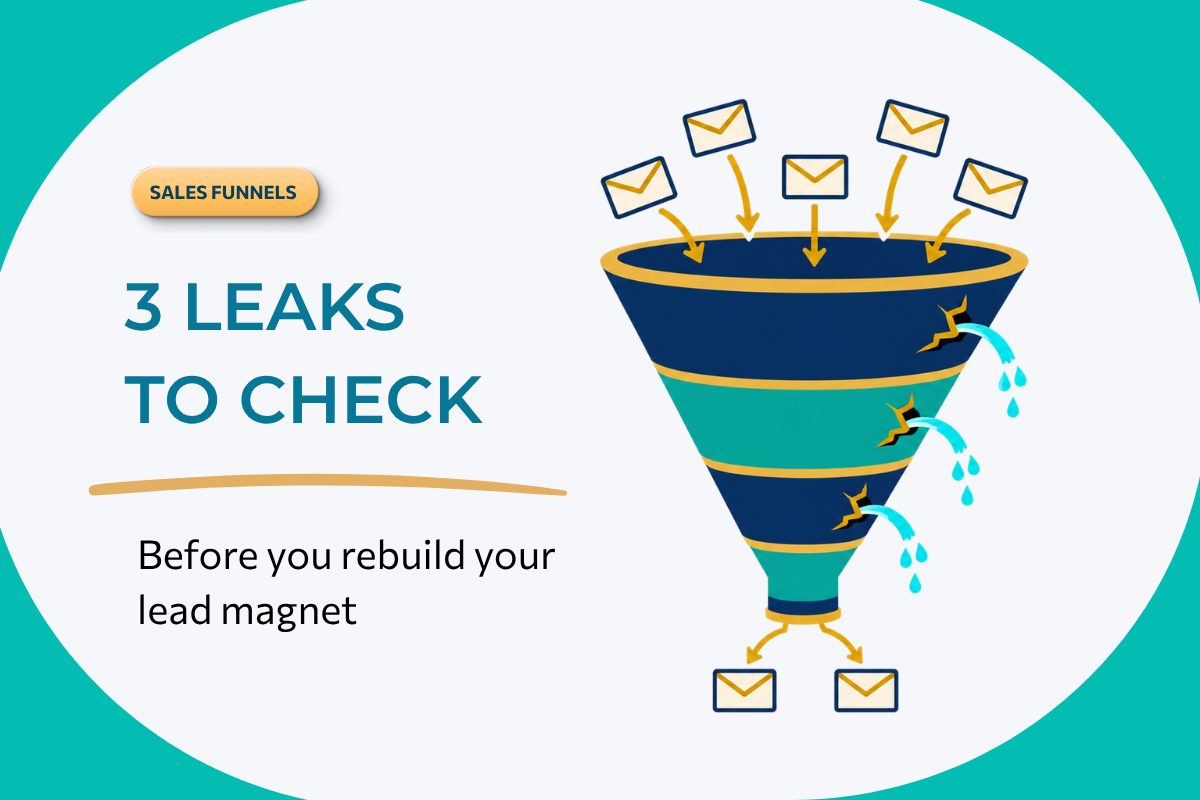
When a lead magnet stops pulling its weight, the first instinct is to scrap it and make a new one. A new checklist, a fresh design, a different title, and three weeks later the numbers look about the same. That happens because the freebie is only one of three places a lead magnet funnel can leak, and rebuilding it does nothing for the other two. Before you spend another weekend in Canva, it's worth finding out where the drop is happening.
Start by Finding the Low Number
"Not converting" can mean two different things, and they need different fixes. The first is your opt-in rate, meaning how many of the people who land on the page sign up. The second is everything after that: how many new subscribers open the delivery email, use what you sent, and eventually book a call or buy.
Pull both numbers before you change anything. Your landing page builder or site analytics will show visitors and signups, and in Keap you can see how many contacts received the lead magnet tag over the same stretch, how many opened the delivery email, and how many moved on to a purchase or a booked call. Thirty days of data is usually enough to see the pattern.
If plenty of people visit and few sign up, the leak is in the offer or the page. If plenty sign up and then go quiet, the leak is in what happens after. That one comparison keeps you from rebuilding the part that was working fine.
Leak 1: The Offer Itself
Sometimes the lead magnet is the problem, and the most common version is an offer that's too broad. "10 Tips to Grow Your Business" competes with every other free download on the internet, while something like "The 3 Emails to Send When a Client Goes Quiet" speaks to one person with one problem, and that person recognizes themselves in the title. We covered how to build a specific, useful offer in What Is a Lead Magnet and What Makes One Convert, so this is the short version for diagnosing one you already have.
Three signs the offer needs work:
- The title needs explaining. If a visitor has to read a paragraph to understand what they'd get, most of them won't bother.
- It solves a someday problem. People sign up for help with whatever is bugging them this week, so a 12-month planning workbook is a harder yes than a template they can use this afternoon.
- It has no link to what you sell. A lead magnet can convert well on the page and still bring in subscribers who never buy, because nothing in it points toward your paid offer. If your service fixes email follow-up, your freebie should touch that same problem at a smaller scale.
Leak 2: The Page and the Form
A good offer can still stall on a page that makes signing up feel like work. Start with the headline, which should name exactly what the visitor gets, in plain language, before they scroll. Then look at placement. MailerLite's data shows embedded forms converting at nearly three times the rate of pop-ups, which matters if your lead magnet only lives in a pop-up most visitors close on reflex.
The form deserves the closest look. Every extra question you ask before someone gets their free gift adds friction, and it adds up fast. Business type, revenue range, biggest challenge, phone number, each one seems reasonable on its own, and together they make a free checklist feel like a job application.
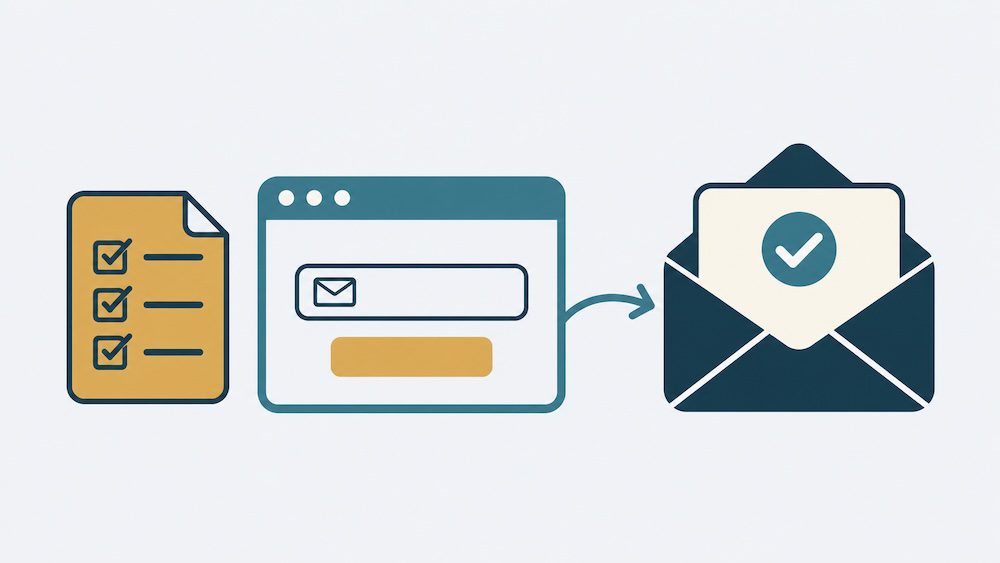
If you segment your list, a two-part form lets you keep the data and the opt-in rate. The first step asks for name and email and delivers the gift right away. The second step, on the thank-you page or in the delivery email, invites them to answer a couple of quick questions so you can send more of what fits their business. The gift never depends on step two, so the people who skip it still get what they came for, and the ones who fill it out give you better answers because they're choosing to. In Keap, each answer can apply its own tag, and your segments build themselves from there.
For more on page structure, Optimizing Your Opt-In Page for Maximum Conversions walks through headlines, trust signals, and the exits that pull visitors away from the form. If you can't tell where on the page people lose interest, a heatmap will show you, the way it did for one of our clients.
Leak 3: What Happens After the Download
This is the leak most people never check, because the signup number looks fine. Someone opts in, the lead magnet goes out, and then nothing measurable happens. The subscriber count grows, sales stay flat, and the freebie takes the blame.
Start with the delivery email. It should arrive within a minute or two, carry a subject line that says exactly what's inside, and put the download link where nobody has to hunt for it. A delivery email that shows up twenty minutes late, or lands in the promotions tab with a vague subject line, loses people at the moment they were most interested. Compare your open rate to Omnisend's 35.53% welcome email benchmark, and if you're well under it, this is where to start.
We saw a version of this with one of our clients, whose open rates started falling off on the funnel emails that came after the opt-in. We pulled the emails that were still getting good opens and used them as the model, reworking the weaker emails and their subject lines to be more in line with what the list was already responding to, and then sent them back out to retest. It's still early, but opens have already started to improve, and the fix happened in the follow-up, where the drop was.
After delivery, look at whether anything points toward a next step. A welcome sequence that sets expectations and a nurture campaign that keeps the relationship warm are what turn a download into a client. Without them, even a great lead magnet ends up as a dead end.
A 20-Minute Check You Can Run This Week
Before rebuilding anything, go through your funnel the way a new subscriber would. Pull up your lead magnet page on your phone and read the headline as if you'd never heard of your business. Count the form fields and decide whether each one is needed before the gift gets delivered, then opt in with a personal email address and note how long the delivery email takes, which tab it lands in, and whether the link works. Over the next week, watch what shows up in your inbox and whether any of it gives you a reason to take the next step.
One of those steps usually stands out as the weak spot for why your lead magnet isn't converting. That's the place to start. A lead magnet that has been quietly underperforming for months can often be fixed with a shorter form or a rewritten delivery email, and the checklist you already made gets to keep doing its job.
Frequently Asked Questions
What is a good conversion rate for a lead magnet?
It depends heavily on where the form sits. MailerLite's 2026 analysis of more than 41,000 signup forms found embedded forms converting at 24.44% on average and pop-ups at 8.96%, with the strongest lead magnet types (giveaways, webinars, and interactive tools) landing between roughly 26% and 29%. If you're well below that with steady traffic, check the offer and the form first.
Should I use a pop-up or an embedded form for my lead magnet?
Embedded forms convert at nearly three times the rate of pop-ups on average, per MailerLite's 2026 data. A pop-up can work as a second placement, but it shouldn't be the only place your lead magnet lives.
How many fields should a lead magnet form have?
Name and email is enough to deliver the gift. If you need more information for segmenting, ask for it in a second, optional step after the lead magnet has been delivered, so the extra questions never stand between someone and the thing they signed up for.
Why do people download my freebie but never buy?
Usually the problem sits after the download. Check whether your delivery email opens near the 35.53% welcome email benchmark from Omnisend's 2026 data, whether a nurture sequence follows it, and whether the lead magnet connects to the problem your paid offer solves. A freebie with no link to what you sell brings in subscribers who were never going to buy.
How long should I test a lead magnet before changing it?
Give it at least 30 days of steady traffic before drawing conclusions. Change one thing at a time, whether that's the headline, the form, or the delivery email, so you know which fix made the difference.
If you've run the check and the fix looks bigger than a shorter form, or you'd rather have the lead magnet, the opt-in page, and the follow-up sequence built as one connected system, that's what our funnel setup service handles.
0 Comments