5 Reasons Your Small Business Needs an Email List (And How to Make It Work)
If you've ever posted something on Instagram that got a hundred likes and zero sales, you already know the problem with relying on social media alone. The algorithm decides who sees your content, not you, and it changes its mind without warning. An email list is different. Once someone hands you their email address, you own that connection. No platform can take it away, bury it in a feed, or shadowban it out of existence.
That's the real case for email marketing list benefits, and it's why I tell every client who's serious about growing past $100K to start building one before they need it, not after.
The average email marketing ROI is $36 for every $1 spent, according to Constant Contact's 2026 benchmarks, making it one of the highest-return channels available to small businesses.
Across industries, the average email open rate sits at 32.55%, so a well-run list reaches roughly a third of your subscribers every single time you hit send.
An automated email sequence runs in the background 24 hours a day, following up with leads, nurturing subscribers, and moving people toward a sale without you writing a single new email once it's built.
If you don't have an email marketing list yet, here are 5 reasons to start one now, and what it takes to make it work.
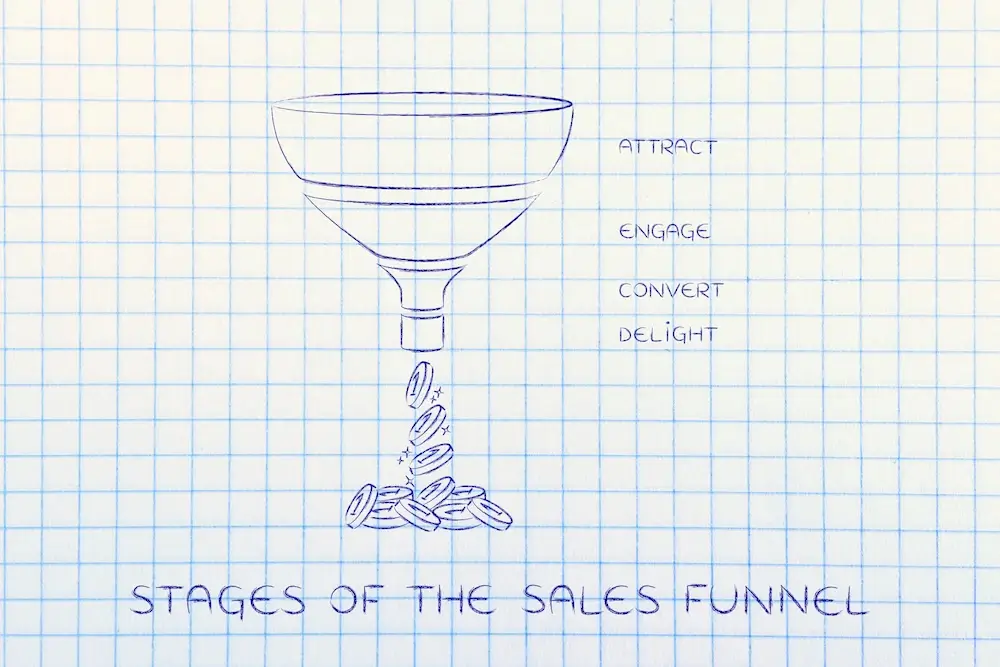
1. It's Your Entry Point Into an Automated Sales Funnel
Someone subscribes to your list because you offered them something worth trading their email address for, a guide, a checklist, a discount, whatever solves a problem they're dealing with right now. What happens next is where most small business owners fall short. They collect the email and then send nothing, or they send one email and stop.
With your CRM running the sequence behind the scenes, that subscriber gets a series of follow-up emails automatically, each one building on the last, until they're ready to hear your offer. If you haven't built one yet, creating a high-converting follow-up email sequence is the piece that turns a list of names into a funnel. You set it up once. It runs for every new subscriber after that, whether you're working, sleeping, or picking your kid up from school.
2. It Builds a Relationship Without You Doing It Manually
Email is direct and personal in a way a social post never is. It lands in someone's inbox, addressed to them, and when the content inside helps them solve something real, it builds trust fast. The mistake I see over and over is business owners treating their list like a megaphone instead of a conversation, blasting promotions with nothing in between.
A nurture campaign fixes that. You write it once, and it delivers value on a set schedule, week after week, long after you've moved on to the next thing on your to-do list. Getting the very first message right matters too. A strong welcome email sets the tone for everything that follows.
3. Exclusive Offers Turn Subscribers Into Repeat Buyers
Giving your list something no one else gets, early access, a subscriber-only discount, a bonus that isn't available anywhere else, tells people they're part of something. That feeling drives loyalty in a way generic promotions never will.
The businesses that do this well aren't improvising it. They've mapped out which offers go to which segment of their list, running behavior-based campaigns so the right offer reaches the right subscriber, and, if you use Keap, its tagging and segmentation tools make that possible without you manually sorting subscribers into spreadsheets.
4. Your List Is a Direct Line to Real Feedback
Social media comments are public, filtered, and often not honest. Email is private, and people tend to say more when they're not performing for an audience. A simple reply-to-this-email question, or a link to a two-minute survey, gets you information you can act on.
I've had clients change an entire offer based on three replies to one email. That's not a lot of data, but it's real, and it's more useful than guessing.
5. It's a Business Asset You Own Outright
Your Instagram followers, your Facebook page, your TikTok audience, none of that belongs to you. The platform can change its algorithm, suspend your account, or shut down entirely, and your audience goes with it. Your email list is the one channel that's yours outright, exportable, portable, and immune to a platform's next policy update.
Most of your competitors are building an email list too, but list building isn't something you're either doing or not doing. It's something you're doing well or doing badly. A list that's automated, segmented, and nurtured on a schedule, and kept warm rather than left to go cold, will outperform a list that gets an occasional newsletter blast, even if the second list is bigger.
Before You Start Building
Get specific before you build anything. What's the actual purpose of this list, brand awareness, sales funnel entry, customer retention, market research? Each of those calls for a different structure, a different cadence, and different automation.
Write it down. One sentence describing the purpose of your list is enough to guide every decision that follows, which platform you choose, what your welcome sequence says, and how often you email.
If untangling the technology is the part that's stopping you (Which CRM to use, automation, segmentation, all of it), that's exactly what I help clients with. Book a discovery call and we'll map out what a working email list looks like for your business.
Frequently Asked Questions
What is an email marketing list, and why does my small business need one? An email marketing list is a group of people who've given you permission to email them, usually in exchange for something of value like a guide or a discount. Small businesses need one because it's a direct channel you own, unlike social media followers, and it consistently drives one of the highest returns of any marketing channel at $36 for every $1 spent.
How much does it cost to start an email marketing list? Entry-level platforms start free or under $20 a month for a small list, though costs rise as your list grows and as you add automation. A CRM like Keap costs more upfront but replaces several separate tools (email, CRM, automation) with one system, which often costs less overall than stitching multiple platforms together.
How big does my email list need to be before it's worth automating? There's no minimum. Automation saves you time whether you have 50 subscribers or 5,000, because the sequence runs the same way regardless of list size. Waiting until your list is "big enough" usually just means months of manual follow-up you didn't need to do.
How long does it take to see results from an email list? Most businesses start seeing engagement within the first few sequences, but real revenue results typically build over 3 to 6 months as your list grows and your automation gets refined based on what subscribers respond to.
Is email marketing still effective in 2026, or has it been replaced by social media and AI tools? Email marketing remains one of the highest-ROI channels available, averaging $36 return per $1 spent across industries as of 2026. Social platforms change their algorithms and reach constantly. Your email list doesn't answer to anyone's algorithm but yours.

0 Comments